



Machine Vision Inspection Complete Solution for 3.5” SBC with 12th/13th Gen Intel Core Processors
1. Solution Positioning
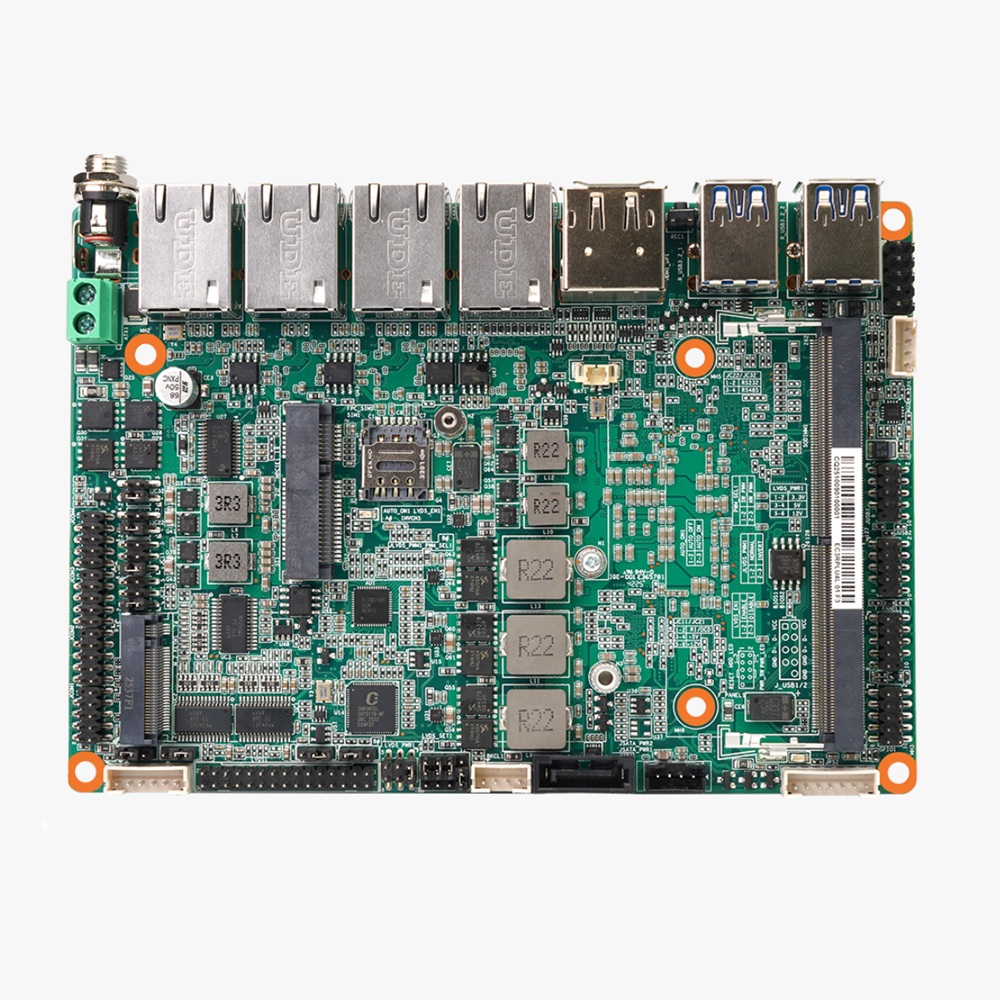
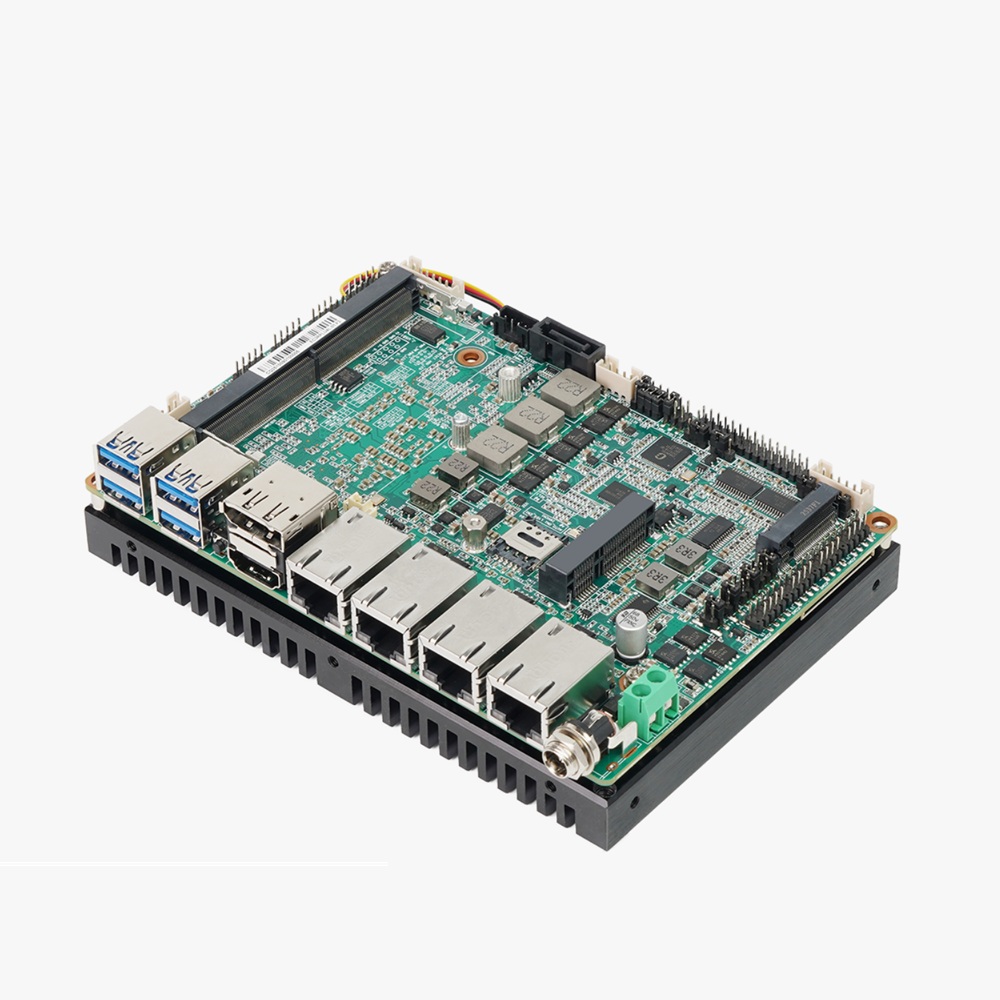
Leveraging the board’s hardware strengths including 4 Gigabit LAN ports, 4×USB3.2 high-speed interfaces, powerful computing performance of 12th/13th Gen Intel Core CPUs, up to 32GB DDR5 large memory, dual independent display outputs, multi-channel COM/GPIO control and wide-voltage power input, this single board computer acts as the core computing host for complete machine vision equipment. It covers the full workflow of image acquisition, algorithm recognition, logic judgment and equipment linkage output, supporting 24/7 non-stop quality inspection on production lines.
Typical Application Scenarios
Electronic component AOI inspection, dimensional measurement of precision parts, surface defect detection, barcode & QR code recognition, packaging integrity inspection, vision-based logistics sorting.
2. Full Hardware Configuration List
2.1 Core Host (3.5” Industrial Single Board Computer)
- CPU: i5-1335U / i7-1355U
Multi-core high-turbo models are preferred for vision projects to deliver stronger parallel image processing capacity. - Memory: 16GB / 32GB DDR5 4800MHz SO-DIMM slot, essential for caching high-definition images from multiple cameras.
- Storage: M.2 NVMe SSD featuring high read/write speed for storing image samples, inspection logs and program algorithms.
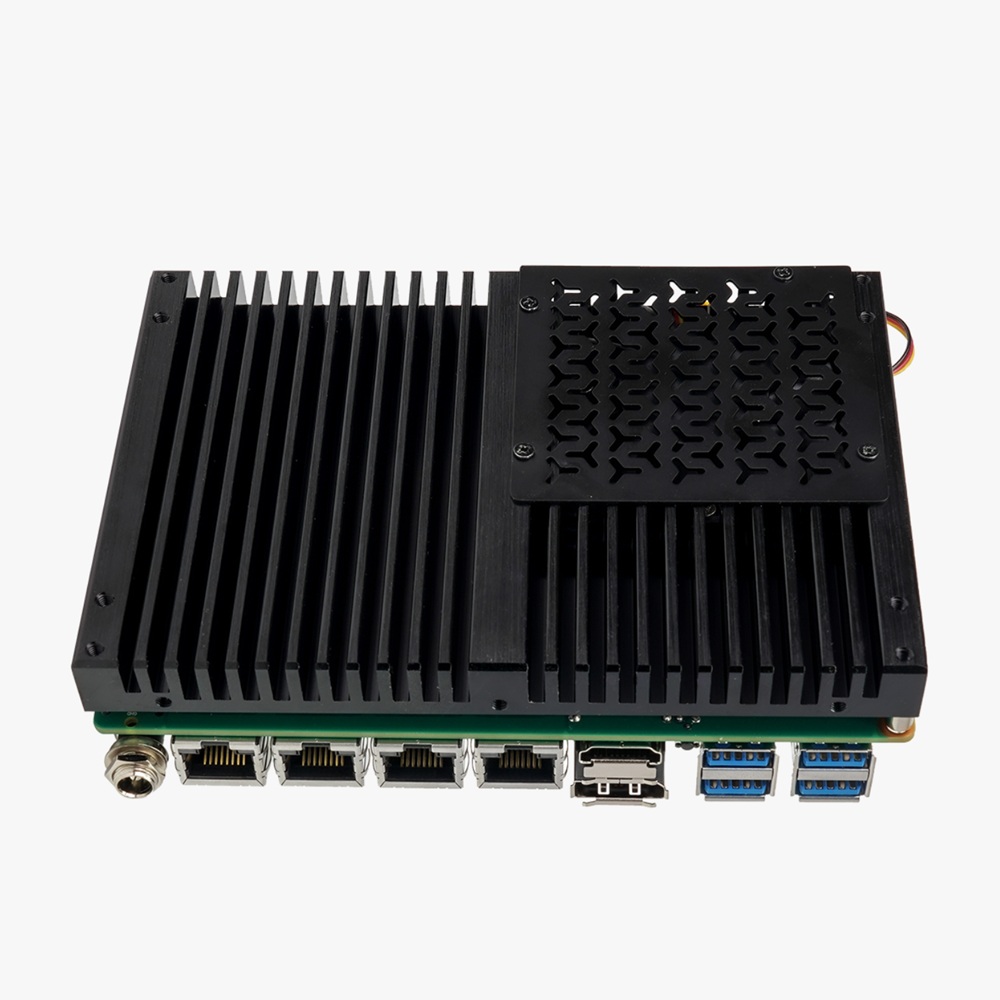
- Heat Dissipation: Custom thickened heatsink available to build fanless sealed enclosures, dust-proof and moisture-proof for dusty workshop environments.
- Power Supply: Compatible with factory 12V/24V DC power; 9~36V wide-range DC input prevents system crash caused by voltage fluctuation and startup surge.
2.2 Image Acquisition Hardware (Matching Board Interfaces)
Option A: GigE Industrial Cameras (Recommended for Multi-Camera Synchronous Inspection)
The board integrates 4×RJ45 Gigabit Ethernet ports, which can directly connect to 4 GigE cameras. Each port operates independently without bandwidth contention, ensuring zero frame loss and ultra-low transmission latency.Matched accessories: industrial light sources, lenses, light controllers.
Option B: USB3.2 Industrial Cameras / 3D Depth Cameras
4 rear-mounted USB3.2 high-speed ports provide sufficient single-channel bandwidth to connect USB global shutter cameras and 3D laser profile scanners for high-precision dimensional measurement.
2.3 Display Output
- Onboard LVDS / eDP: Connect to local touch screens for operators to adjust parameters and preview captured images on-site.
- Dual independent display via HDMI + DP: Support split-screen separate display. One screen shows real-time camera footage, while the other displays inspection reports and NG product statistics.
2.4 Peripheral Linkage Control (Onboard Internal I/O)
- 4×COM serial ports: Connect light controllers, servo motors, displacement platforms and barcode readers.
- GPIO digital input & output:DI: Receive trigger signals from photoelectric sensors when workpieces arrive for photo capture.
- 4×internal USB2.0 ports: Connect foot switches, barcode scanners and compact card readers.
2.5 Wireless Expansion (Mini PCIe Slot)
Optional 4G / Wi-Fi modules enable real-time upload of inspection data and defect images to factory MES systems or cloud platforms for remote production yield monitoring.
3. Complete Operation Workflow
- As workpieces travel along the production line, photoelectric sensors send trigger signals to the GPIO input, and the mainboard issues capture commands.
- Multiple GigE / USB3.2 cameras capture high-definition images simultaneously, which are transmitted at high speed and cached in the mainboard memory.
- The 12th/13th Gen Intel Core CPU and integrated graphics run vision algorithms in parallel to perform defect detection, dimensional measurement, character recognition and presence verification.
- The program automatically classifies workpieces as OK or NG:
- OK qualified products: GPIO outputs release signals, and all relevant data is saved to the local SSD.
- NG defective products: Trigger audible & visual alarms, drive cylinders to reject workpieces, and archive defect images simultaneously.
- Real-time footage and statistical reports are displayed on dual screens synchronously.
- Inspection records can be optionally uploaded to the factory MES system via 4G / Wi-Fi for full data traceability and capacity analysis.
4. Core Advantages of This Board for Machine Vision
Powerful Multi-Camera Parallel Acquisition
Equipped with 4 independent Gigabit LAN ports and 4 USB3.2 ports for dual image acquisition channels, supporting up to 8 cameras working simultaneously for multi-station synchronous inspection. No additional network expansion cards are required, simplifying the overall machine structure.
Sufficient Computing Power & Memory for Complex Algorithms
The hybrid multi-core architecture of 13th Gen i5/i7 processors paired with up to 32GB large memory can cache massive high-resolution images. It runs mainstream vision software including Halcon, OpenCV and VisionPro smoothly, and supports lightweight deep learning for defect classification.
Dual Independent Displays Simplify On-Site Debugging
Operators can view raw captured images on one screen while adjusting inspection thresholds and reviewing historical defective samples on the other, greatly improving debugging efficiency.
All-In-One Native Industrial I/O Control
Integrated serial ports and GPIO realize camera image capture, motion platform control and sorting actuation with a single board. No extra PLC is needed, cutting overall hardware costs and wiring complexity.
High Adaptability to Harsh Industrial Environments
9~36V wide-range power input plus optional fanless cooling with dust-proof sealed enclosures suit dusty workshops such as coating lines, electronics assembly plants and metal processing workshops. The compact 3.5” form factor can be embedded directly into equipment racks to save installation space.
Mass Storage & Remote Data Traceability
M.2 high-speed SSD provides large-capacity storage for massive defect images; Mini PCIe wireless modules connect to factory cloud platforms to realize digital management of full production data.
5. Segmented Industry Application Scenarios
1. AOI Inspection for 3C Electronics
Detect PCB solder joint defects, chip offset, housing scratches and missing connectors; multiple cameras scan both sides of circuit boards synchronously.
2. Dimensional Measurement of Hardware & Precision Components
Inspect outline dimensions, chamfer quality and burr presence of screws, bearings and stamped parts; 3D USB cameras are deployed for height difference measurement.
3. Food Packaging Surface Inspection
Check packaging seal integrity, printed production date legibility and foreign matter contamination.
4. Vision Sorting for Logistics
Read QR codes on delivery parcels, detect damaged packages and drive sorting cylinders for automatic parcel diversion.
5. Appearance Inspection for Lithium New Energy Industry
Screen defects on battery cell pole pieces, housing dents and uneven glue seams.
Post time: May-17-2026


